



Why does high cortisol keep you awake at night even when you’re utterly exhausted? If you lie there with racing thoughts, wide awake between 2–4 a.m. with your heart racing, or wake up feeling wired yet drained after “enough” hours, cortisol sleep disruption is often the invisible driver. This 2026 guide dives deep into the latest research: how the stress hormone sabotages your sleep architecture, why women experience stronger effects, how it clashes with different chronotypes, the comprehensive signs and real-world causes of nighttime spikes, and the precise, evidence-based steps to lower evening cortisol so you finally get the deep, restorative sleep your body needs.
Content
- What Is Cortisol and How Does It Affect Sleep?
- Your Natural Cortisol Rhythm & Sleep
- How High Cortisol Disrupts Your Sleep Stages
- Comprehensive Signs of High Cortisol at Night
- What Causes High Cortisol at Night?
- Why Women’s Sleep Is Often More Affected by Cortisol
- How Cortisol Affects Different Chronotypes
- The Vicious Cycle: Poor Sleep Raises Cortisol
- How to Lower Cortisol Naturally for Better Sleep
- Tools to Help Regulate Cortisol
- FAQ – Frequently Asked Questions
What Is Cortisol and How Does It Affect Sleep?
Cortisol, your body’s main glucocorticoid stress hormone, is produced by the adrenal glands under the direction of the hypothalamic-pituitary-adrenal (HPA) axis. In the right amounts it sharpens focus, mobilises energy, and supports immunity. When levels stay high into the evening, however, cortisol directly suppresses melatonin secretion, reduces adenosine accumulation (the molecule that builds natural sleep pressure), elevates core body temperature, and locks the sympathetic nervous system in fight-or-flight mode. The result: delayed sleep onset, frequent micro-arousals, and far less time in restorative deep and REM stages.
Your Natural Cortisol Rhythm & Sleep
Cortisol follows a tightly regulated 24-hour circadian pattern that is designed to peak in the morning and bottom out at night. Here’s the healthy daily curve:
| Time of Day | Cortisol Level | What It Does for Sleep |
|---|---|---|
| Morning (Cortisol Awakening Response – CAR) | Highest (peaks 30–45 min after waking) | Boosts alertness and resets your internal clock |
| Midday | Gradual decline | Maintains steady focus without overstimulation |
| Evening / Night | Lowest (nadir around midnight) | Allows melatonin surge, adenosine build-up, and deep sleep dominance |
How High Cortisol Disrupts Your Sleep Stages
Elevated nighttime cortisol doesn’t just make falling asleep harder — it actively fragments your entire sleep architecture. 2024–2025 EEG studies using at-home polysomnography show it shortens slow-wave (deep) sleep by up to 25 %, reduces REM duration and quality, and increases micro-arousals every 10–15 minutes. Even if your tracker shows 7–8 hours, restorative processes are impaired because cortisol prevents the natural drop in core body temperature required for deep-sleep onset.
Signs of High Cortisol at Night
High evening cortisol shows up in many ways. Watch for these common and often-overlooked signs:
- Racing thoughts or mental looping the second your head hits the pillow
- Feeling “wired but tired” — physically exhausted yet mentally alert
- Frequent awakenings between 2–4 a.m. accompanied by a racing heart or sudden anxiety
- Difficulty falling back asleep after those middle-of-the-night wakes
- Stress-eating or intense sugar/salt cravings after 8 p.m.
- Morning anxiety, grogginess, or feeling “hungover” despite long sleep
- Teeth grinding, jaw clenching, or restless legs during the night
- Frequent tossing and turning or elevated resting heart rate at bedtime
- Next-day brain fog, irritability, or fatigue even after “enough” sleep
- Heart palpitations or hot flashes that seem to appear out of nowhere in the evening
What Causes High Cortisol at Night?
The most common triggers that push cortisol higher after sunset include:
- Chronic psychological stress or rumination about the next day
- Blue-light exposure from screens (suppresses melatonin and raises cortisol directly)
- Caffeine after 2 p.m. or hidden sources in chocolate or energy drinks
- Alcohol — it sedates at first but triggers a strong cortisol rebound 3–5 hours later
- Late intense exercise (after 7 p.m.)
- Irregular sleep schedules, shift work, or social jetlag
- High-sugar or high-carb meals close to bedtime (blood-sugar crashes spike cortisol)
- Overtraining without recovery days
- Environmental stressors: bedroom too warm (>18 °C), not completely dark, or noisy
- Hormonal fluctuations, especially in women (detailed below)
Why Women’s Sleep Is Often More Affected by Cortisol
Yes — women’s sleep is measurably more sensitive to cortisol spikes. Estrogen and progesterone interact directly with the HPA axis, making women’s stress response stronger. In the luteal phase (the week before your period), the same stressor can raise cortisol 20–30 % higher than in the follicular phase. Perimenopause and menopause amplify nighttime surges even further because fluctuating estrogen removes its natural protective effect on the HPA axis. 2025 studies on sleep fragmentation in women showed bedtime cortisol rising by 27 % after just one night of disrupted sleep, with the effect especially pronounced in hypoestrogenic states. Pregnancy, postpartum, and even burnout hit women harder, leading to more frequent 3 a.m. wake-ups and psychosomatic symptoms that compound the cycle.
How Cortisol Affects Different Chronotypes
Your chronotype (morning lark, night owl, or intermediate) shapes your personal cortisol curve. Early chronotypes experience an earlier morning peak and a faster evening decline, making it easier to wind down by 10 p.m. Night owls have a naturally delayed cortisol drop — their levels stay elevated later into the evening, which is why they often struggle to fall asleep before midnight even when exhausted. When a night owl is forced onto an early schedule, the mismatch drives even higher evening cortisol and poorer sleep efficiency. Morning larks, by contrast, get a stronger cortisol awakening response but can suffer if they stay up late. Aligning your routine (light exposure, exercise timing, wind-down) with your chronotype prevents unnecessary cortisol spikes and improves sleep quality dramatically.
The Vicious Cycle: Poor Sleep Raises Cortisol
Sleep loss and high cortisol feed each other in a well-documented bidirectional loop. One night of fragmented sleep raises the next day’s and evening cortisol by 15–30 %. That extra cortisol then shortens the following night’s sleep, lowers efficiency, and lengthens time to fall asleep. 2024 intensive 15-day longitudinal studies using daily salivary cortisol and EEG confirmed this: higher pre-sleep cortisol directly predicts worse sleep the same night, while poor sleep the night before flattens the next day’s cortisol curve and delays its evening drop.
How to Lower Cortisol Naturally for Better Sleep
You can interrupt the cycle with these targeted, research-backed habits:
- Get bright natural sunlight within 30–60 minutes of waking — even 5–10 minutes resets the cortisol awakening response and normalises the full day curve
- Exercise early or midday — movement clears cortisol when it’s supposed to be higher; evening workouts can raise it
- Protect your evening wind-down: dim lights, cut screens 60–90 minutes before bed, and follow a consistent 30-minute ritual (journaling, gentle yoga, or reading)
- Keep the bedroom cool (16–18 °C), completely dark, and quiet
- Stabilise blood sugar with a light protein-rich evening meal and consider magnesium glycinate or L-theanine 30–60 minutes before bed
- Foster a cortisol detox diet
- Practise daily stress-reduction techniques such as box breathing or meditation — they lower HPA-axis reactivity within weeks
Tools to Help Regulate Cortisol
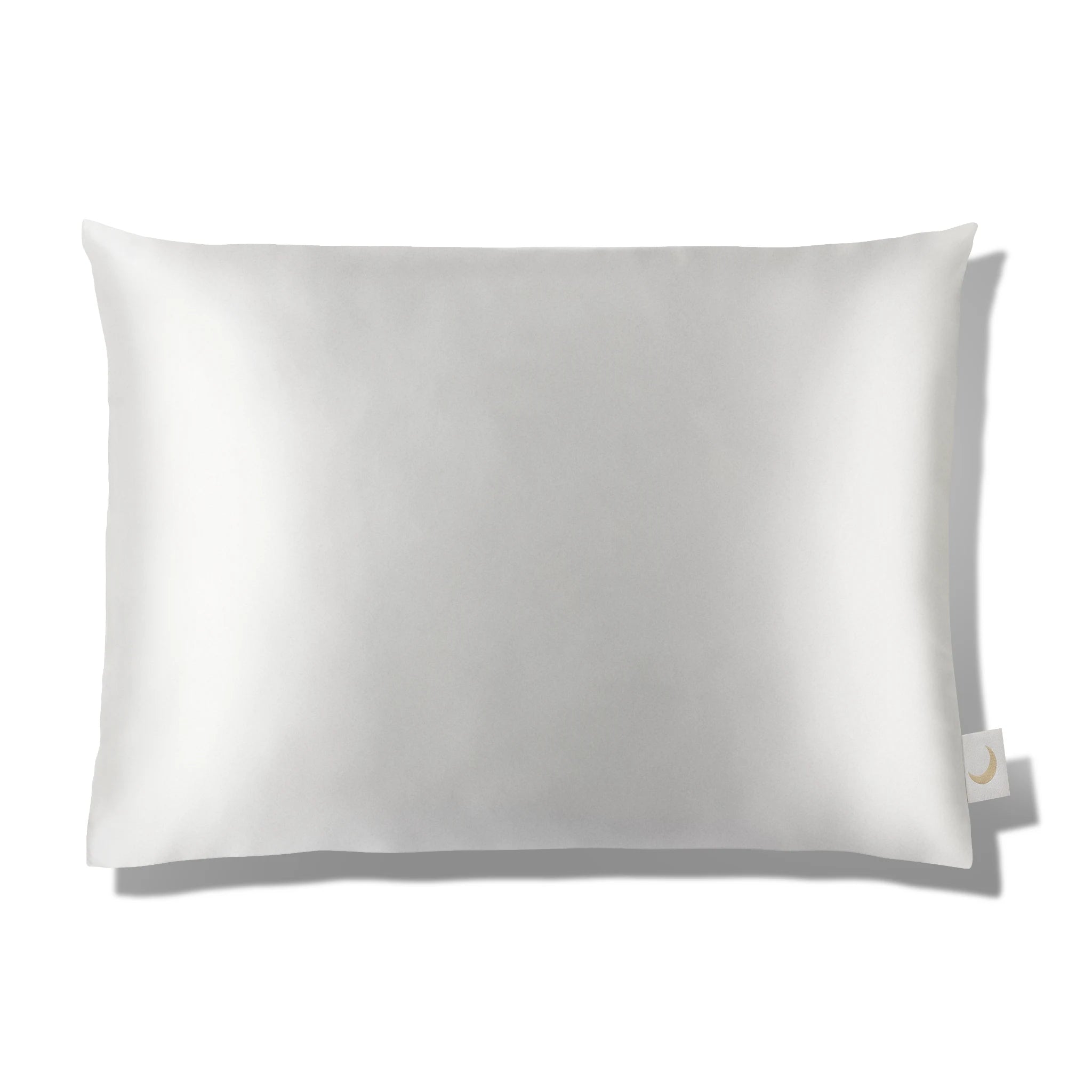
Even small physical stressors can keep cortisol elevated. Silk sleep masks block 100 % of light to protect natural melatonin production, while the temperature-regulating silk pillowcase eliminates skin friction and overheating — two subtle triggers that raise nighttime cortisol. Many sleepers report falling asleep faster and experiencing significantly fewer 2–4 a.m. wake-ups after switching to silk.
FAQ – Frequently Asked Questions
How does cortisol affect sleep?
High evening cortisol suppresses melatonin, reduces adenosine, raises core temperature, and keeps the nervous system in fight-or-flight mode, leading to delayed sleep onset, fragmented sleep, and less deep restorative stages.
What are the signs of high cortisol at night?
Racing thoughts, 2–4 a.m. awakenings with anxiety, wired-but-tired feeling, stress-eating, teeth grinding, restless legs, morning grogginess, heart palpitations, and next-day fatigue despite long sleep.
Why is women’s sleep more affected by cortisol?
Estrogen and progesterone amplify HPA-axis reactivity; luteal phase, perimenopause, and pregnancy all cause higher nighttime cortisol responses and more frequent sleep disruption.
Does my chronotype influence cortisol and sleep?
Yes — night owls have a delayed evening cortisol decline that makes winding down harder, while morning larks experience an earlier drop that supports better sleep alignment.
Can a silk sleep mask really help lower cortisol?
Yes. Total darkness prevents light-induced cortisol spikes and supports melatonin, while silk reduces physical discomfort that keeps cortisol elevated.
How long does it take to lower cortisol and improve sleep?
Most people notice faster sleep onset and fewer night wakes within 7–14 days; full rhythm rebalancing and deeper sleep usually appear after 3–6 weeks of consistent habits.
Sources
- Yap Y et al. (2024). Daily associations between salivary cortisol and EEG-assessed sleep: a 15-day intensive longitudinal study. SLEEP.
- Andreadi A et al. (2025). Modified Cortisol Circadian Rhythm: The Hidden Toll of Night-Time Stress on Sleep Disorders. International Journal of Molecular Sciences.
- Cohn AY et al. (2023/updated 2025). Effects of Sleep Fragmentation and Estradiol Decline on Cortisol in Women. Journal of Clinical Endocrinology & Metabolism.
- National Institutes of Health / Endotext (updated 2025). HPA Axis and Sleep – Circadian Regulation of Cortisol and Melatonin.
- Liu PY et al. (2024). Rhythms in cortisol mediate sleep and circadian impacts on health. SLEEP.
- Kudielka BM et al. (2022). Evaluation and update of the expert consensus guidelines for the assessment of the cortisol awakening response. Psychoneuroendocrinology.