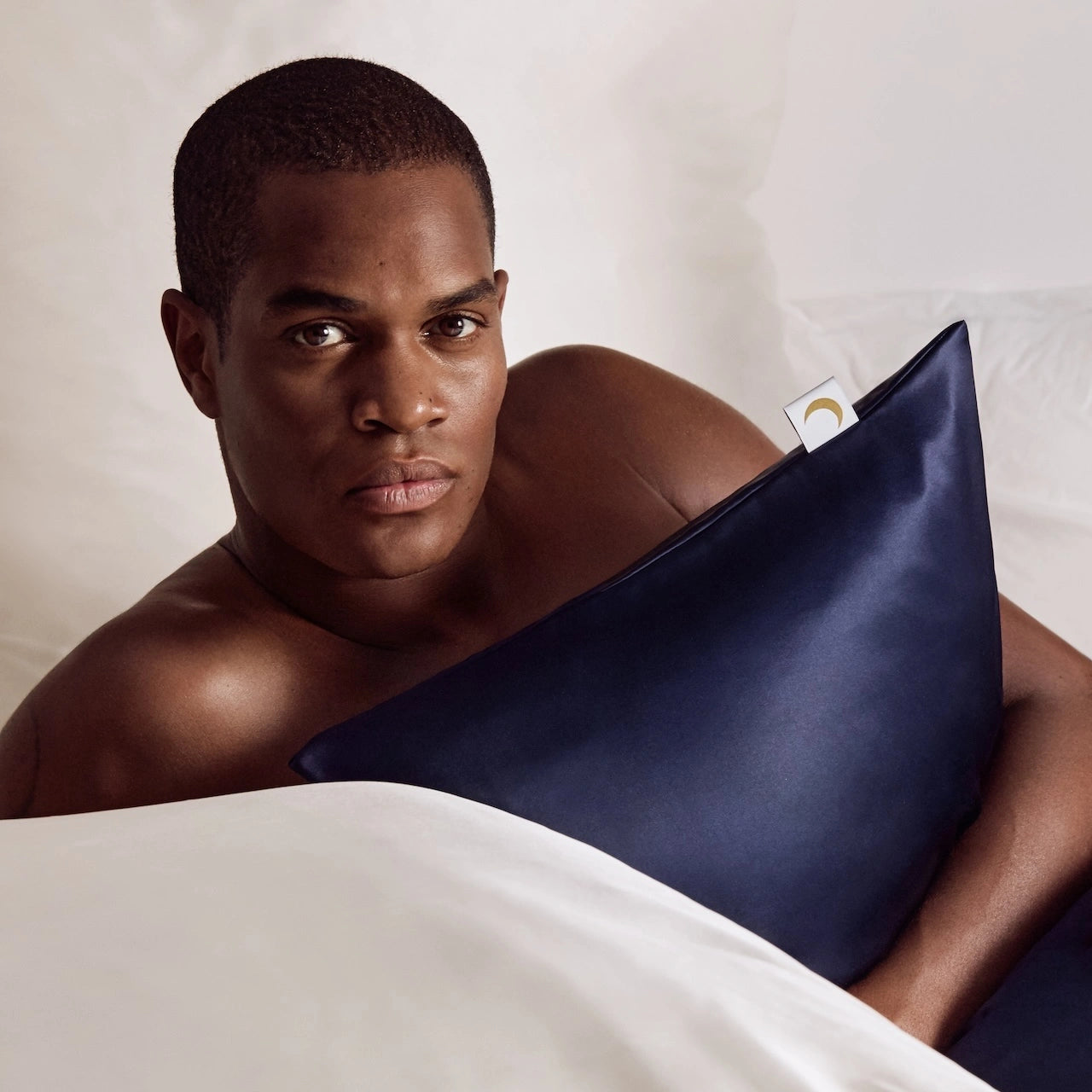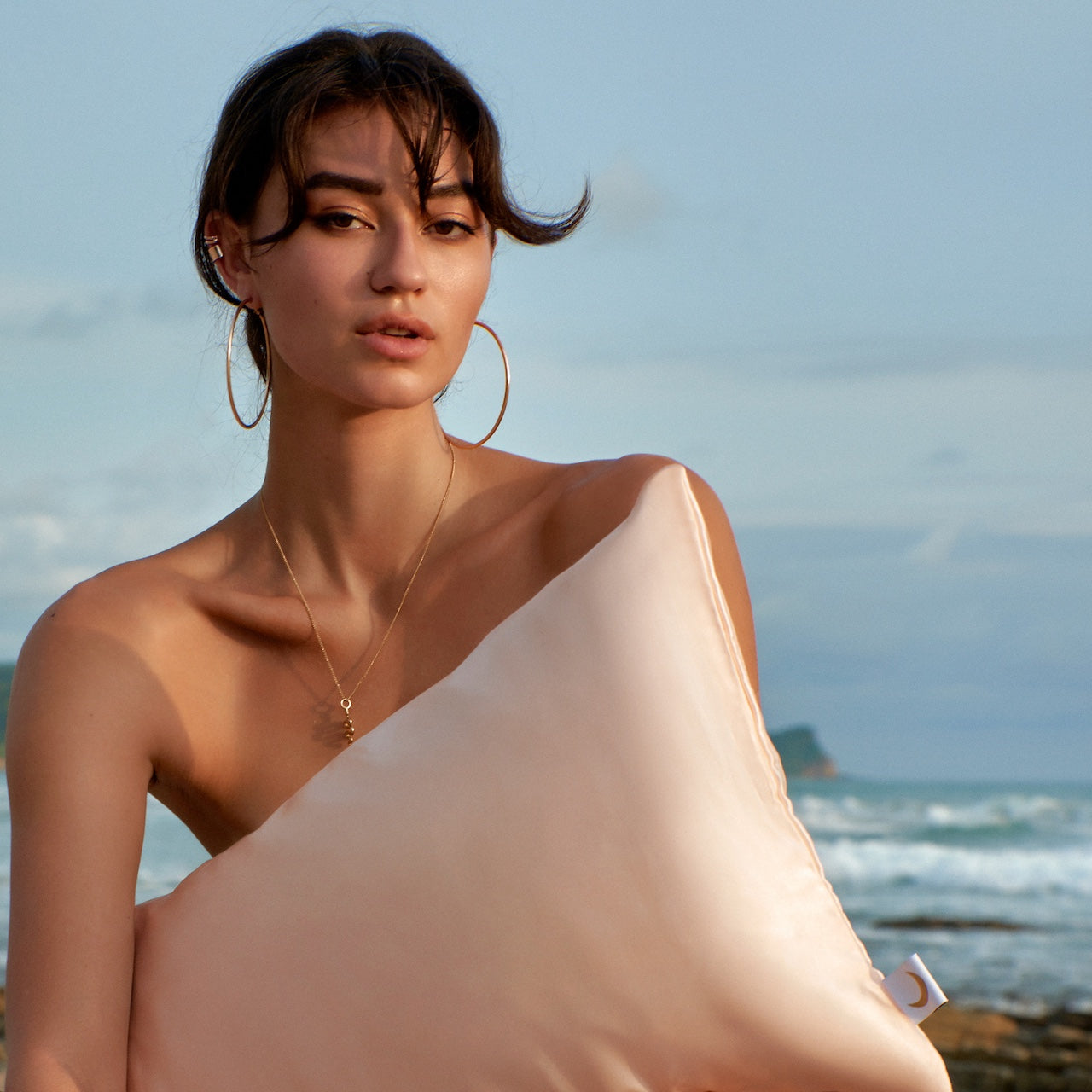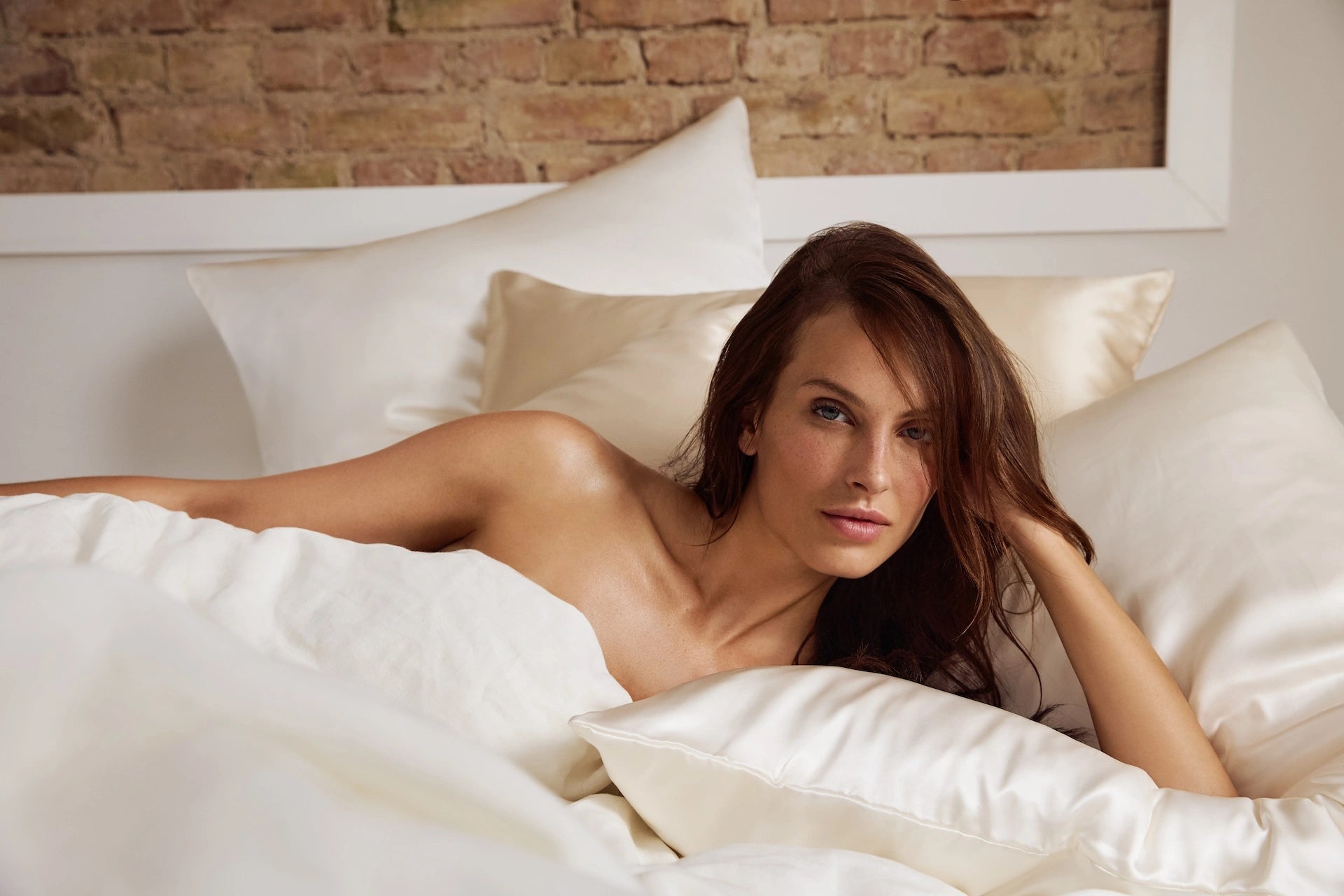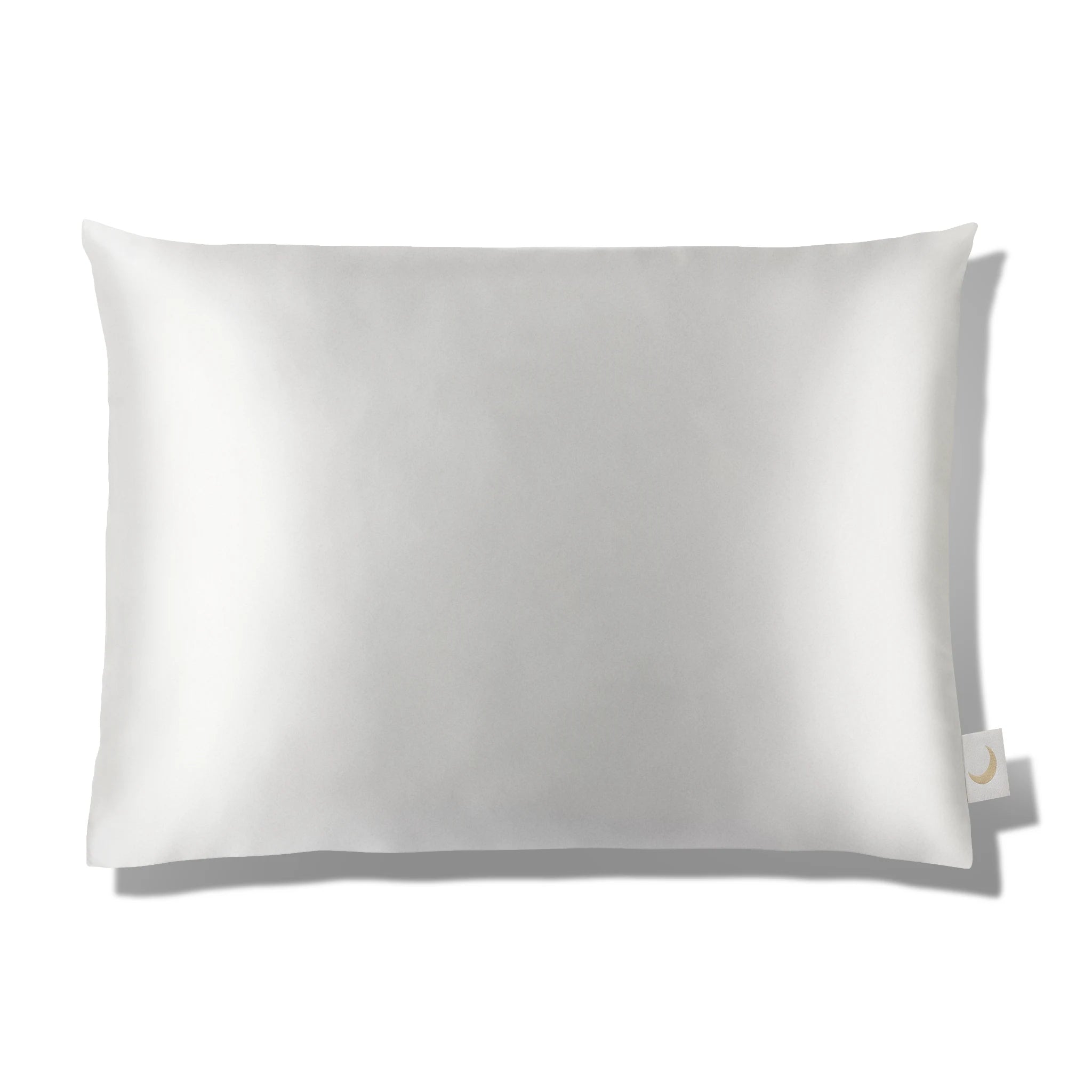
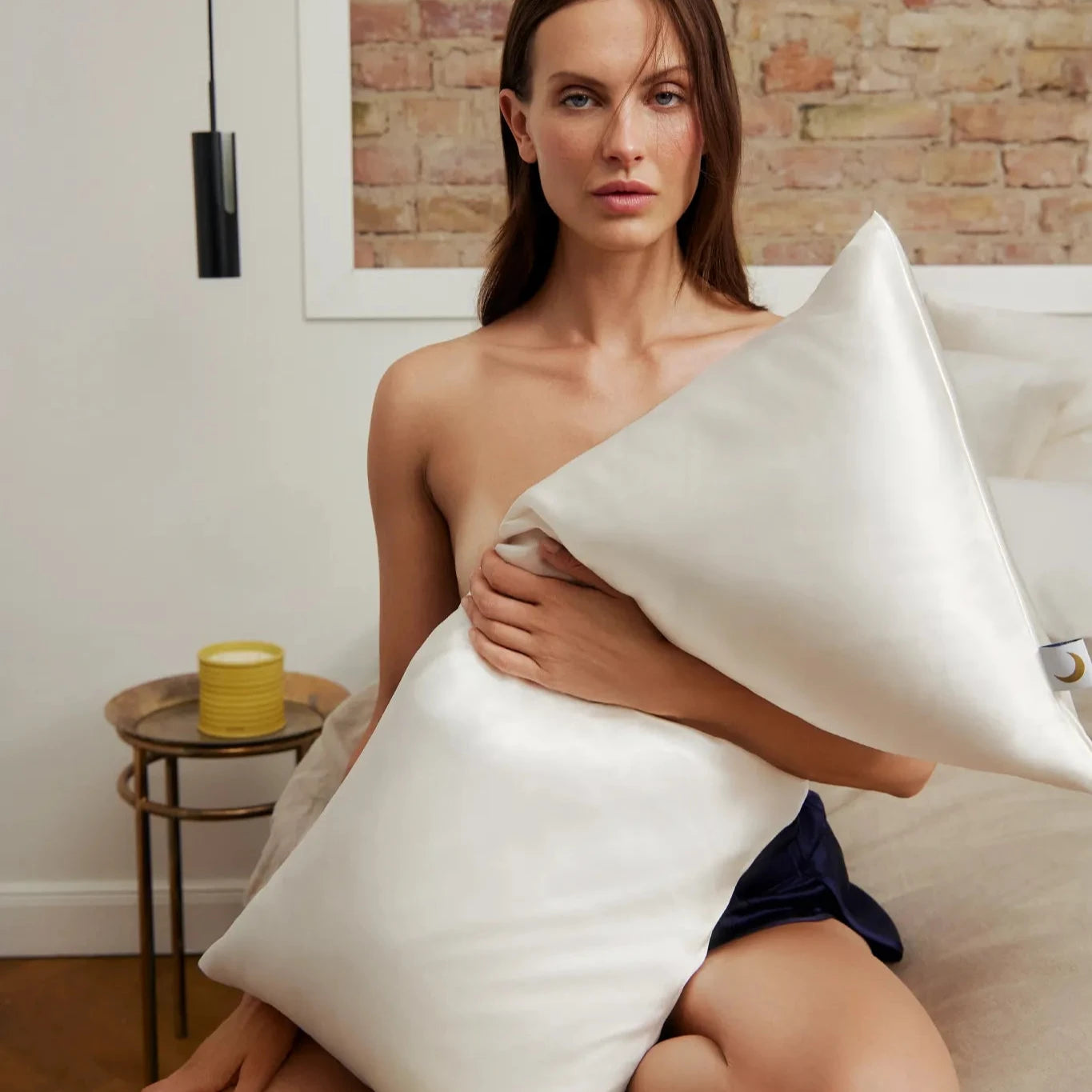



Looking for the highest-quality mulberry silk pillowcase that delivers the same hair and skin benefits as traditional silk — without any compromise? You’re not alone. The mulberry silk market is exploding in 2026 with premium bedding and beauty products promising smoothness, durability, temperature regulation, and luxury feel. But what exactly is mulberry silk and why is it considered the gold standard? In this guide we explain what it is, how it’s made, its real benefits, and why Moonchild’s mulberry silk outperforms everything else.
Content
- What Is Mulberry Silk?
- Where Does the Name Mulberry Silk Come From?
- The Silkworm Bombyx Mori Feeds on the Mulberry Tree
- How Do We Produce the Natural Protein Fibre Mulberry Silk?
- What Makes Mulberry Silk Rather Expensive?
- Benefits of Mulberry Silk
- Mulberry Silk Bedding and Mulberry Silk Pillowcases
- Is Sericulture Ethical? Are Silkworms Harmed in the Making of Silk?
- Mulberry Silk vs Satin – Why the Difference Matters
- Why Moonchild Uses Only 22 Momme Grade 6A Mulberry Silk
- Can I Wash 100% Mulberry Silk?
- FAQ – Mulberry Silk 2026
What Is Mulberry Silk?
Mulberry silk is the highest quality silk in the world. It comes exclusively from the Bombyx mori silkworm that feeds only on mulberry leaves. The result is the smoothest, strongest and most luxurious natural protein fiber available – the exact material we use for every Moonchild product.
Where Does the Name Mulberry Silk Come From?
Mulberry – the silkworm tree. The production process of silk, also called sericulture, became popular seven thousand years ago in China. Mulberry trees, being prominent in some regions of China, were a great source of food for caterpillars. After observation, the mulberry leaves appeared to be the silkworms favourite. The local population came to this conclusion: having more mulberry trees attracts more silkworms, hence allowing them to produce more of the precious silk. With the outgrowing popularity of silk in the world at the time, the production needed to be monitored and the silkworms started to be domesticated. They were totally right because the silkworms present in this area are naturally attracted by the Mulberry odorant's called cis-jasmone.
The Silkworm Bombyx Mori Feeds on the Mulberry Tree
The production process of mulberry silk is only possible with the help of a special species, the bombyx mori (or bombyx indica), which requires a lot of attention. Even though the whole process hasn’t changed since, some countries have perfected their technique to achieve the finest mulberry silk. Nowadays, the worldwide experts in sericulture are China and India. Until the mid-19th century, Italy was a worldwide producer of silk cocoons, too. Some families have persisted in the art of making the finest type of silk, making Italy the first mulberry silk producer in Europe.
Generally speaking, the term mulberry silk is inspired by the local farmers who decided to exclusively use mulberry leaves as a diet for their silkworms. Nowadays what we call mulberry silk, is silk that comes from the bombyx mori or bombyx indica, having mulberry leaves as their only food. The result of this selective diet is a light and smooth white milky colour of the silk.
How Do We Produce the Natural Protein Fibre Mulberry Silk?
As you may know, silk is the material used by certain caterpillars to create their cocoon. This essential step in their life cycle is the result of days of constant feeding on mulberry leaves. The accumulated energy from the mulberry feast helps caterpillars to form a protective cocoon to prepare for an undisturbed metamorphosis. The later silk fabric benefits from the same great characteristics that the cocoon provides to the silkworm during its metamorphosis: the natural protein fibre is anti-bacterial, anti-fungal, dust repellent and temperature regulating.
To obtain the final product, each cocoon is brushed on the surface to find the outside end of the filament. A continuous filament part of the cocoons can measure up to one and a half kilometers. We should bear in mind that during this process only the inner part of the cocoon is used to create silk. Leading to this result: about 2.500 silkworms are required to produce about 500 grams of fine silk.
What Makes Mulberry Silk Rather Expensive?
The complexity of the production process doesn’t stop mulberry silk from being popular. But why is that? The answer is quite simple: mulberry silk threads are smoother, stronger and finer than any other variety of silk in the world. Fun fact: with the same diameter mulberry silk is stronger than steel. Even though it is truly strong, mulberry silk is lower in density than cotton and wool. Giving it the ability to retain as much as a third of its weight in moisture without feeling damp. Therefore, this material doesn’t need any ‘airing out’ and will remain odorless. The bombyx mori/indica caterpillar also produces a uniformly coloured cocoon containing the longest silk threads available. A crucial trait when it comes to spinning them together to create the finest type of silk. Making mulberry silk durable and high in quality.
Benefits of Mulberry Silk
Each of these properties is the result of the need for silkworms to protect itself in the cocoon. To allow its metamorphosis the caterpillar builds a fire, mite and weather-resistant house. These properties are what make mulberry silk so luxurious. They make a feelable difference on our skin, hair and overall well-being. Being highly durable, mulberry silk can be compared to a luxurious cocoon made by the finest silkworms.
Mulberry Silk Bedding and Mulberry Silk Pillowcases
What some call ‘the king of silk’, is becoming an increasingly popular bedding material due to its natural properties. Mulberry silk helps create an incredibly comfortable sleeping environment. Mulberry silk helps to balance our temperature and moisture throughout the night to support an undisturbed sleep. During their metamorphosis, silkworms need a comfortable and undisturbed place, where they can breathe and feel warm and cosy at the same time. When it comes to sleeping, humans need the same kind of comfort. We benefit from that exact environment nature created for them (fun fact: to create a standard-sized mulberry silk pillowcase, we need 300 cocoons). But when choosing mulberry silk and choosing to change our sleep, we should ensure that the materials are cruelty-free and allow the silkworm to live their full life cycle.
Is Sericulture Ethical? Are Silkworms Harmed in the Making of Silk?
If you read through the whole article you probably know that silk is the result of an essential part of the caterpillar's metamorphosis. Unfortunately for the conventional part of the industry, creating silk means killing the silkworms within their cocoons. But there’s an ethical workaround to a thousand-years-old process: Peace silk or Ahimsā Silk. When choosing products respecting this principle, we safe the life of silkworms. Moreover, this also ensures that mulberry trees are grown in an organic environment and protect the environment and workers. To learn more, read on in our article: what is Peace silk or Ahimsā silk?

Mulberry Silk vs Satin – Why the Difference Matters
| Fabric | Natural? | Friction Reduction (Hair/Skin) | Breathability / Cooling | Durability | Best For | Price Level |
|---|---|---|---|---|---|---|
| Moonchild Mulberry Silk | 100% Yes | Excellent ★★★★★ | Excellent ★★★★★ | Excellent ★★★★★ | Hair, skin, luxury sleep | $$$ |
| Polyester Satin | No (synthetic) | Fair ★★ | Fair ★★ | Fair ★★ | Budget only | $ |
Why Moonchild Uses Only 22 Momme Grade 6A Mulberry Silk
Most brands use thinner 19 momme mulberry silk. Our 22 momme version feels richer, lasts longer and delivers superior hair & skin benefits. Combined with our exclusive Peace Silk™ (cruelty-free from leftover cocoons in Como, Italy) it is the purest mulberry silk you can buy.
Can I Wash 100% Mulberry Silk?
It is safe to wash our 100% mulberry silk pillowcase in the cold hand wash program of the washing machine. Read on: how washing silk is actually easy.
FAQ – Mulberry Silk 2026
What is the difference between mulberry silk and regular silk?
Only mulberry silk comes from silkworms fed exclusively on mulberry leaves – resulting in the longest, smoothest fibers.
Is 22 momme mulberry silk worth the price?
Yes – it’s significantly more durable and luxurious than 19 momme while still feeling ultra-soft.
Is Moonchild mulberry silk cruelty-free?
100% yes – we only use Peace Silk from empty cocoons after the butterfly has hatched.
Fun Facts
- A silk filament can be stretched about 20 percent beyond its original length before breaking.
- 2.500 silkworms are required to produce about 500 grams of fine silk.
- On rare occasions two silkworms spin a cocoon together – it is called a dupion.