




A silk pillowcase for color-treated hair is a pillow cover made from 100% mulberry silk chosen specifically to cut the overnight friction and moisture loss that fade dye faster than sun or heat exposure. Dyed strands have a rougher, more porous cuticle than virgin hair, so they grip cotton fibers and lose pigment and moisture with every turn of the head. That difference is why a color-treated head needs a different pillowcase strategy than someone with untreated hair.
- A silk pillowcase for color-treated hair cuts the friction that strips dye and dulls shine faster.
- Mulberry silk in the 19-25 momme range suits most colored, chemically treated hair types in 2026.
- Cold-wash silk pillowcases under 86°F (30°C) to protect both the fabric and your color.
- Cotton and satin absorb moisture and pigment faster than natural mulberry silk, worsening post-color dryness.
Why It Matters for Color-Treated Hair
Chemically processed hair loses some of its cuticle integrity during the coloring process, which means it absorbs and releases moisture more easily than untreated hair. A silk pillowcase for hair reduces the surface friction that pulls at that already-weakened cuticle overnight, instead of gripping and tugging the way cotton fibers do.
Color fade is driven by more than shampoo and UV exposure. Every night your head moves across a pillow, and on cotton that motion strips a small amount of moisture and pigment along with it. Riders of hair extensions and bleached or highlighted hair report the same friction problem, which is why treatments for color-treated extensions follow nearly identical care logic to color-treated natural hair.
A smoother sleep surface won't reverse fade that's already happened, but it slows the rate of future fade — that's the entire mechanical argument for switching fabrics.
Audit how your pillowcase is treating your color
Before buying anything, check what's actually happening to your hair overnight. This costs nothing and tells you whether fabric is even the problem.
- Check your pillow for a faint color transfer stain after a fresh dye job
- Note whether hair feels drier or frizzier on waking versus before bed
- Track how many days pass between color touch-ups compared to your stylist's estimate
- Feel the pillowcase fabric — rough or matte texture usually means more friction
- Compare fade speed on the side you sleep on most versus the other side
Reduce friction with what you already own
The free fix comes before any purchase. A wrapped scarf or a loose braid limits contact between hair and pillow regardless of fabric.
- Loosely braid hair before bed instead of leaving it fully loose
- Wrap a silk or satin scarf around the hairline and lengths
- Sleep on your back when possible to reduce total scalp-to-pillow contact
- Switch out a rough, older cotton pillowcase for a newer, smoother one in the short term
- Avoid tight elastics or clips that create pressure points overnight
Upgrade to a lower-friction pillowcase
Once the free fixes stop being enough — usually when color fade outpaces your touch-up schedule — a dedicated silk pillowcase becomes the faster, lower-maintenance option. Moonchild's Organic Peace Silk Pillowcase in mulberry silk is built for exactly this kind of nightly wear on color-treated strands.
- Choose 100% mulberry silk over silk blends, which reintroduce friction-prone fibers
- Confirm the closure is an envelope or zipper style that keeps the case snug and smooth
- Check that the silk is dyed with color-fast, low-transfer methods so it won't stain freshly dyed hair
- Buy at least two so one is always clean while the other is in wash rotation
- Pair with a silk sleep mask if facial oils and hair products are transferring onto the same pillow
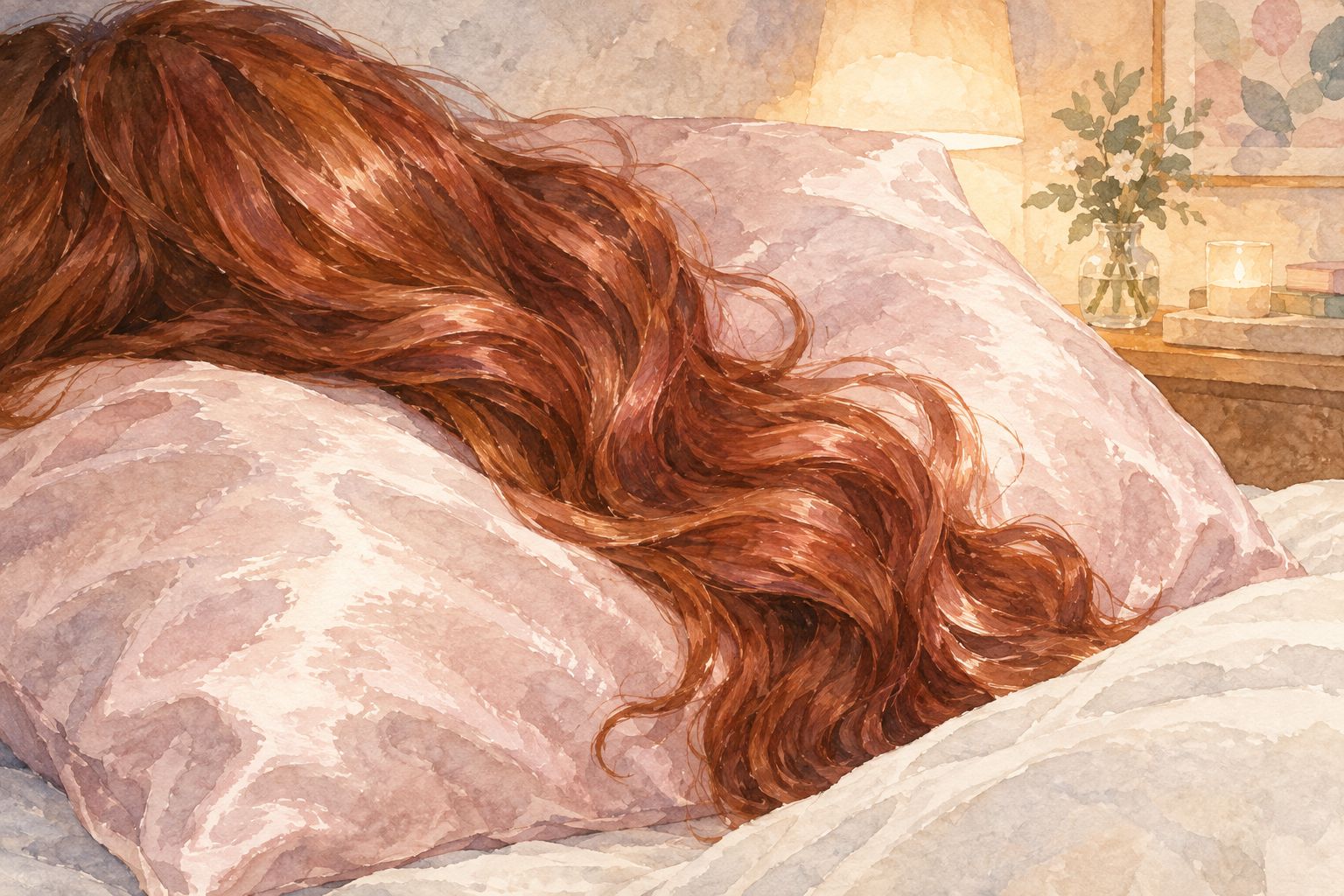
Match momme weight and weave to your hair type
Momme measures silk density by weight, not automatically quality, and colored hair benefits from a specific range rather than the heaviest number on the shelf.
- Aim for 19-25 momme mulberry silk — light enough to breathe, dense enough to resist snagging
- Pick a charmeuse weave for maximum surface glide against damaged cuticles
- Avoid silk-satin or silk-polyester blends marketed as "silk feel" — they behave like satin, not silk
- Confirm long-fiber, Grade A silk claims rather than trusting momme alone
- For extension-heavy or very long colored hair, size up to a larger pillowcase for full coverage
Wash color-treated silk correctly
Washing habits protect both your color and the silk fibers, and the wrong detergent or temperature undoes the benefit of switching fabrics in the first place.
- Hand wash or use a gentle machine cycle in cold water under 86°F (30°C)
- Use a pH-neutral detergent made for silk rather than standard laundry detergent
- Skip fabric softener — it coats fibers and reduces the smooth glide that protects color
- Air dry flat or hang-dry away from direct heat and sunlight
- Wash every 1-2 weeks, or sooner if you use heavy leave-in color-protecting products


Rotate other color-protecting habits
A pillowcase alone won't compensate for other fade-accelerating routines, so pair the fabric change with a few habit fixes.
- Rinse hair with cooler water instead of hot, which opens the cuticle and releases pigment
- Use a UV-protecting leave-in spray on days with direct sun exposure
- Space out clarifying shampoo use to once every 2-3 weeks for color-treated hair
- Let hair dry fully before bed rather than sleeping on damp, still-porous strands
Track your fade timeline
Monitoring gives you proof the fabric switch is working, rather than guessing.
- Photograph hair color under the same lighting weekly for the first month
- Log the interval between salon touch-ups before and after switching pillowcases
- Note any change in morning frizz or tangling alongside color changes
Compare Your Options for Color-Treated Hair
| Option | Best for | Key limitation |
|---|---|---|
| 100% mulberry silk pillowcase (19-25 momme), like the Organic Peace Silk Pillowcase | Color-treated, chemically processed, or extension-heavy hair | Requires cold-wash, gentle detergent care |
| Satin (polyester) pillowcase | Shoppers wanting some slip on a tighter budget | Traps heat, prone to static, doesn't wick moisture like natural silk |
| Standard cotton pillowcase | Hair with no color or frizz concerns | Absorbs moisture and pigment, creates the most friction overnight |
| Silk pillowcase paired with a silk bonnet or scarf | Long or extension-heavy colored hair needing full coverage | Two items to wash and rotate instead of one |
Verdict: a genuine 19-25 momme mulberry silk pillowcase is the only option on this table built specifically to slow color fade — satin and cotton simply weren't designed for it.
Common Mistakes Color-Treated Hair Owners Make
- Sleeping on cotton the first few nights after a fresh dye job, when hair is most porous and most vulnerable to pigment loss
- Washing silk pillowcases in hot water with regular detergent, which strips the fiber's natural smoothness and shortens its useful life
- Buying a "silk-feel" polyester or satin case mislabeled as silk, which delivers none of the friction reduction real mulberry silk provides
- Layering heavy leave-in oils or dry shampoo onto silk without washing it often enough, causing buildup that cancels out the low-friction benefit
- Going to bed with wet, freshly colored hair regardless of pillowcase fabric — damp, swollen cuticles release pigment faster than dry ones
FAQ
What's the best silk pillowcase for color-treated hair in 2026?
A 100% mulberry silk pillowcase in the 19-25 momme range, like Moonchild's Organic Peace Silk Pillowcase, is the standard recommendation for color-treated hair in 2026. Lower-grade silk blends or satin substitutes don't deliver the same friction reduction.
Is silk better than satin for dyed hair?
Yes, natural mulberry silk outperforms satin for dyed hair because it wicks moisture instead of trapping it and creates less static and heat. Satin is typically a polyester weave that mimics silk's shine but not its fiber behavior.
How often should you wash a silk pillowcase for color-treated hair?
Wash every 1-2 weeks, or sooner if you apply heavy leave-in color-protecting products. Cold water under 86°F (30°C) and a pH-neutral silk detergent protect both the fabric and your color.
Does a silk pillowcase really slow color fade?
A silk pillowcase reduces the overnight friction and moisture loss that accelerate color fade, though it won't reverse fading that's already occurred. It works alongside good washing habits and UV protection, not instead of them.
What momme weight silk pillowcase is best for colored hair?
Aim for 19-25 momme mulberry silk in a charmeuse weave. Higher momme numbers alone don't guarantee better performance if the weave is loose or the silk grade is low.
Can I sleep with wet colored hair on a silk pillowcase?
It's better to let hair dry before bed regardless of pillowcase fabric, since damp, swollen cuticles release pigment faster. Silk reduces friction on wet hair too, but it doesn't stop pigment loss caused by dampness alone.
Is bamboo or silk better for color-treated hair?
Mulberry silk generally has a smoother, denser fiber surface than bamboo viscose, giving it a friction advantage for colored hair. Bamboo is more breathable and often cheaper, but it doesn't match silk's slip.
How much does a silk pillowcase for color-treated hair cost?
Pricing varies by momme weight, size, and finish, so check current listings directly on the retailer's site. Heavier momme and larger sizes generally sit at the higher end of any given brand's range.
One Last Thing
Momme weight gets all the attention, but weave density and fiber grade matter just as much for color-treated hair. A 19-momme charmeuse weave in long-fiber Grade A silk often reduces friction better than a heavier, lower-grade 25-momme case — the number on the label is only half the story in 2026, and it's worth asking about weave and grade before momme when you compare pillowcases.


