




Shift workers need a silk sleep mask that blocks daylight without pressing crease lines into skin that's already short on recovery time. Night nurses, warehouse crews, and rotating dispatchers sleep on a schedule the sun ignores, so light-blocking and fabric choice matter more here than for a standard 11 p.m. sleeper in 2026.
- A silk sleep mask for shift workers works best paired with blackout curtains, not as a standalone fix for daytime light.
- Mulberry silk avoids the heat buildup and crease lines foam masks leave on skin during long daytime sleep sessions.
- 3D contoured shapes suit side sleepers and anyone wearing lash extensions on rotating shifts.
- Wash the mask on the same cycle as your pillowcase to stop it irritating skin during frequent daytime naps.
Why a silk sleep mask matters for shift workers
Shift Work Sleep Disorder is a recognized occupational health issue tracked by bodies like NIOSH, caused by sleeping against the body's natural circadian signal. For someone sleeping from 8 a.m. to 4 p.m., residual daylight through blinds is often the single biggest disruptor left once blackout curtains go up. A silk sleep mask closes that last gap between "mostly dark" and "actually dark," right when the body is already fighting its own clock.
The fabric matters as much as the blackout itself. A Peace Silk Sleep Mask made from mulberry silk sits against tired eyes without the friction cotton straps or foam edges create over an 8-hour daytime sleep window, and it doesn't trap heat the way synthetic contour masks do when a bedroom warms up mid-afternoon.
Shift workers also sleep in more places than most people: a locker room before an on-call shift, a car between split shifts, a hotel room on a travel rotation. A mask that packs flat and doesn't need washing after every single use earns its spot in a bag in a way a bulky foam mask never does.
Build the routine, step by step
Block your bedroom light first
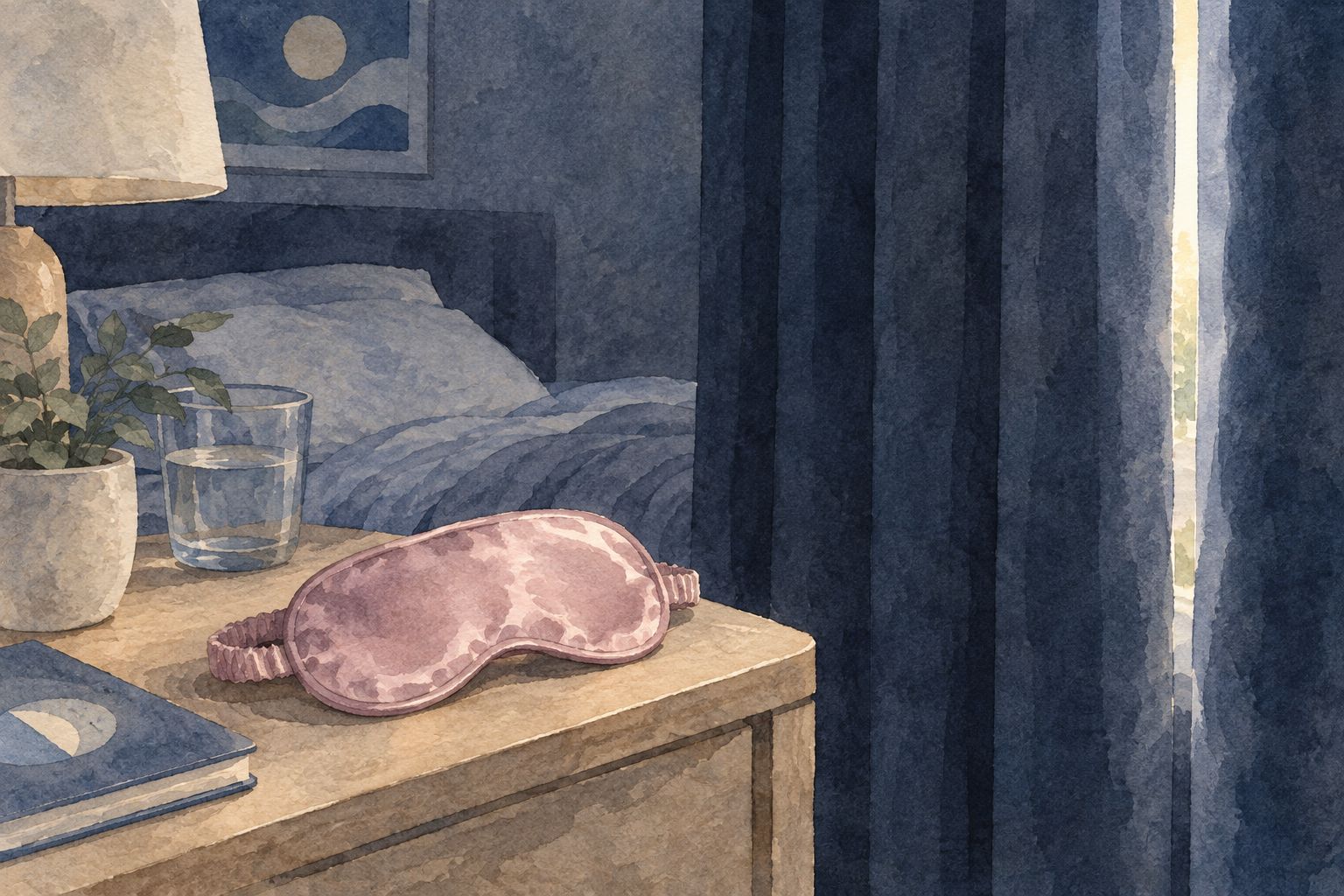
A mask can't fix a room that's still half-lit. Handle the room before layering on the mask, especially if daytime sleep happens on a rotating schedule where the sun angle changes week to week.
- Hang blackout curtains that overlap the window frame by a few inches on each side
- Cover any LED indicators on chargers, monitors, or smoke detectors with tape
- Check the gap under the bedroom door for hallway light and add a draft stopper
- Tell housemates or family the room is "night" during your sleep window, not just when the sun says it's dark
For a side-by-side look at how much light different mask designs actually stop, see Moonchild's blackout silk sleep masks guide.
Time the mask to your sleep window, not the clock
Consistency does more for shift workers than any single product. Put the mask on at the same point in your wind-down every time you sleep, whether that's 7 a.m. or 11 p.m., so your body learns the cue.
- Pick one consistent trigger, mask on means lights off, even if your bedtime shifts by hours week to week
- Avoid screens for the last 10 minutes before the mask goes on; blue light undercuts the blackout you just built
- If you nap between split shifts, use the same mask for naps as for full sleep so the cue stays consistent
- Keep the mask within reach of wherever you actually fall asleep, not just the bedroom nightstand
Match the mask to how you actually sleep
Side sleepers crush a bulky contoured mask into the pillow within minutes; back sleepers can handle more structure. Sleep position should decide the shape before anything else does.
- Flat, low-profile silk masks work better for side sleepers and anyone who moves a lot during daytime sleep
- 3D contoured masks keep pressure off the eyelids, which matters for lash-extension wearers and anyone who rubs their eyes on waking
- Adjustable straps beat elastic-only designs for shift workers whose face swells slightly with fatigue after a long run of night shifts
- Weighted masks add pressure some people find calming, but they run hot and aren't ideal for a warm daytime bedroom
Get the fit right around your eyes
A mask that leaks light at the nose bridge defeats the point of blacking out the room in the first place.
- Check for light leaking in at the nose bridge and cheekbones, not just the top edge
- Adjust straps so the mask sits snug without pressing on the eyelids themselves
- If you wake with a crease line down your cheek, the strap is too tight or the fabric is too stiff for daytime sleep
“If the crank of a strap leaves a crease when you wake up, the mask is blocking light with pressure, not fit.”
Build a short wind-down ritual around putting it on
The mask works better as the last step in a routine than as the only step.
- Dim household lights for the last 15 minutes before your sleep window, even during the day
- Put the phone in another room, or at minimum face-down and on silent
- Use the same short sequence every time: curtains, mask, same side of the bed
Wash it on the same schedule as your pillowcase
Shift workers sleep more often across a 24-hour cycle than a standard 9-to-5 sleeper, split shifts, naps, full nights, which means the mask picks up oil and product residue faster.
- Hand wash silk in cool water with a gentle detergent, then lay flat to dry away from direct heat
- Rotate two masks if you nap and sleep a full shift in the same day, so one is always dry
- Skip fabric softener; it coats the silk fibers and reduces how smoothly the mask sits against skin
Silk sleep mask vs other blackout options for shift workers
A silk sleep mask solves one problem well: light and friction at the eyes. It doesn't replace a dark room, and it's not the only option on the market. Here's how the main choices stack up for someone sleeping on a shift schedule in 2026.
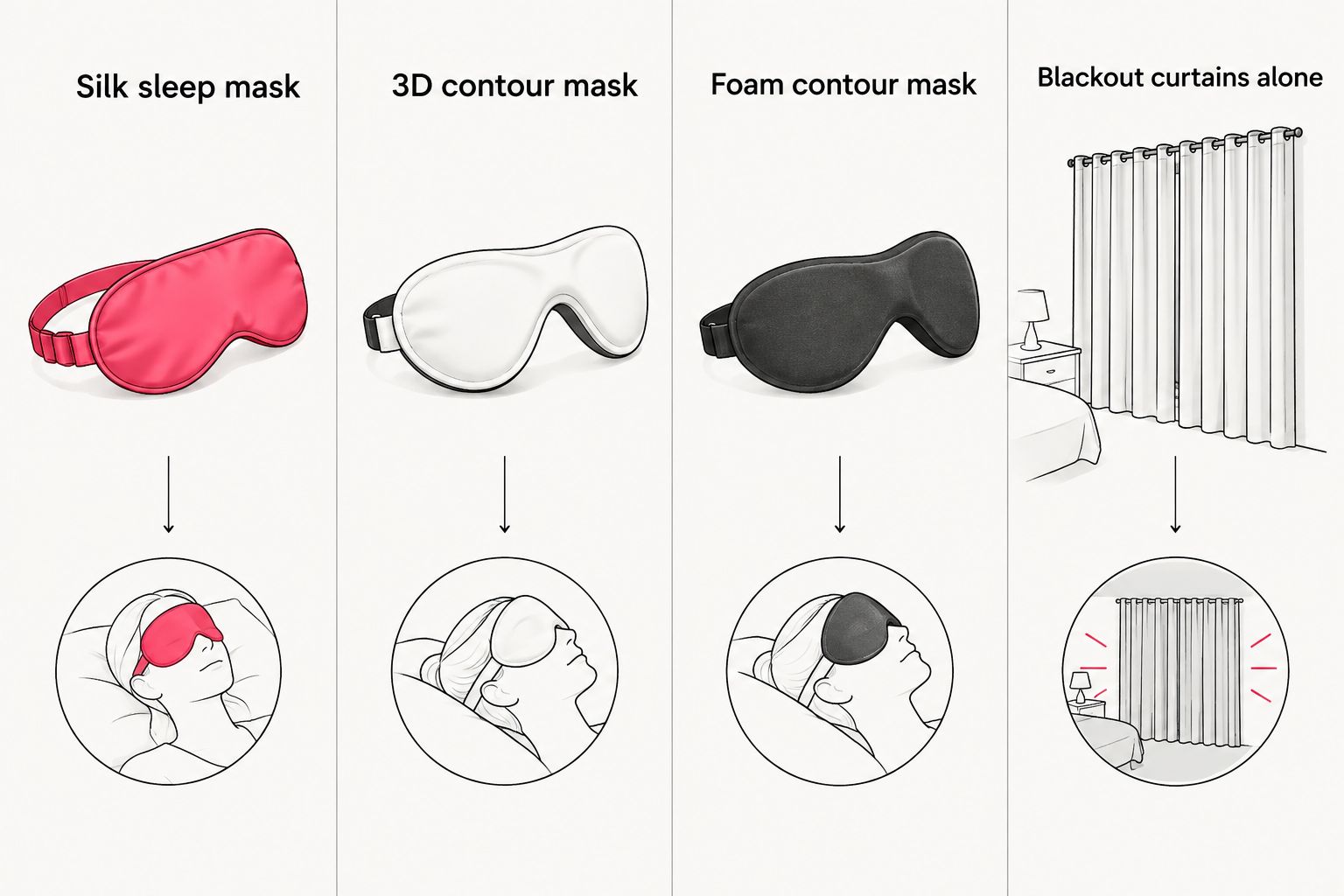
| Option | Best for | Key limitation |
|---|---|---|
| Peace Silk Sleep Mask (Moonchild) | Shift workers who want blackout without heat or crease lines | Less cushioning than a foam contour mask |
| 3D Silk Sleep Mask Champagne Gold | Side sleepers and lash-extension wearers who need zero eyelid pressure | Bulkier profile, less packable for travel |
| Foam contour mask (generic) | Total blackout in a very bright room | Traps heat; synthetic material can irritate skin over an 8-hour daytime sleep |
| Blackout curtains alone, no mask | Shared bedrooms where a partner keeps different hours | Doesn't help on travel days, in a car, or in a locker room |
For most shift workers, a mulberry silk sleep mask paired with blackout curtains blocks more light with less heat than a foam contour mask or curtains alone.


Common mistakes shift workers make with sleep masks
- Treating the mask as a replacement for blackout curtains instead of a supplement to them
- Buying a mask for looks and never checking whether it leaks light at the nose bridge
- Using the same unwashed mask for a 6 a.m. nap and a full 8-hour daytime sleep without airing it out between
- Reaching for a heavier weighted or foam mask on a warm afternoon, then wondering why sleep feels hotter and shorter
- Skipping a consistent wind-down cue, so the mask never becomes the trigger it's supposed to be
FAQ
What's the best silk sleep mask for shift workers in 2026?
A mulberry silk sleep mask paired with blackout curtains is the best combination for shift workers in 2026, since it stops residual daylight without the heat buildup foam masks cause. Fit around the nose bridge matters as much as the fabric.
Is a silk sleep mask better than a foam contour mask for daytime sleep?
Silk runs cooler against skin and doesn't leave crease lines the way foam does over an 8-hour daytime sleep. Foam can offer more rigid blackout structure, but it traps more heat.
How often should shift workers wash a silk sleep mask?
Wash it on the same cycle as your pillowcase, since frequent daytime naps and full sleeps add up to more total sleep hours per week than a standard schedule. Hand wash in cool water and lay flat to dry.
Do silk sleep masks help with Shift Work Sleep Disorder?
A silk sleep mask addresses one contributor to Shift Work Sleep Disorder, residual light during daytime sleep, but it doesn't treat the underlying circadian disruption on its own. It works best alongside blackout curtains and a consistent sleep schedule.
Can a silk sleep mask replace blackout curtains?
No. A mask blocks light at the eyes only; curtains block light across the whole room. Shift workers need both, especially on travel days when only a mask is portable.
What sleep mask shape is best for side sleepers on rotating shifts?
Flat, low-profile silk masks work better than bulky 3D contour masks for side sleepers, since a raised mask gets crushed against the pillow within minutes.
Do 3D contoured silk masks work with eyelash extensions?
Yes, the raised design keeps fabric off the eyelids, which protects lash extensions and reduces pressure marks on waking.
How much light does a silk mask block compared to curtains alone?
A silk mask blocks light at the eyes directly, closing gaps that curtains leave around window edges and door frames. Curtains alone still leave enough ambient light in most daytime bedrooms for a mask to make a noticeable difference.
One last thing
Momme weight, the density measure used for silk, affects more than softness. A denser weave blocks more ambient light through the fabric itself, not just through the fit around your eyes, which matters most for someone sleeping through a bright afternoon rather than a dark night in 2026.


